
Subgenre Categories
The Subgenre Ledger
A curated directory of the thematic subgenres that shape casino, card-game, and high-stakes gambling cinema. The page groups films by narrative patterns, character archetypes, and production contexts rather than by specific casino games. Each category links to related reviews, plot breakdowns, and character analyses across the site.
Six Editorial Categories
Editorial Note
Reading Casino Cinema Through Genre
Subgenres reveal how filmmakers use gambling settings to explore risk, obsession, and consequence—not to promote betting.
Casino films often blend heist, noir, and character-study elements, making subgenre classification a useful critical tool. Grouping films by narrative patterns helps readers discover titles with similar themes and structures. The site's categories are editorial, not official industry classifications, and they reflect the analytical approach of an independent New Zealand-based portal serving NZ cinephiles.
All analysis on Filmrevie Wvault is framed as cultural commentary, never as gambling promotion. By organising coverage around recurring story shapes and character functions, the ledger makes it easier to move from a single review to a wider conversation about how casino cinema works.
Category Index
The Six Subgenres
Six editorial categories organise the site's casino and gambling film coverage: Heist and Con Films, High-Stakes Drama, Poker Face-Offs, Casino Noir, Gambling Comedies, and Character Studies. Each category links to its dossier section further down the page. The categories are not mutually exclusive; many films appear in multiple subgenres.
- Heist and Con FilmsThe casino as a high-security target, built on planning, teamwork, and the thrill of the score.
- High-Stakes DramaGambling as a crucible for character, where the wager becomes a metaphor for larger life risks.
- Poker Face-OffsPsychological duels and the quiet intensity of the card table, built on bluffing and reading opponents.
- Casino NoirFatalism, chiaroscuro lighting, and morally compromised protagonists under the casino's artificial light.
- Gambling ComediesHigh-stakes settings used for farce, satire, and comic ensemble chaos.
- Character StudiesIntimate portraits of obsession, compulsion, and the personal cost of the game.
Dossier 01
The Casino Heist
Heist and con films use the casino as a high-security target, focusing on planning, teamwork, and the thrill of the score. Common elements include elaborate schemes, double-crosses, and ensemble casts. The casino setting provides a natural backdrop for tension and surveillance, turning every corridor, camera, and croupier into part of the obstacle course.
These films are less about the game itself than about the architecture of the plan: who knows what, when the switch will happen, and how the crew will walk away. The pleasure comes from watching skilled professionals work through a problem under pressure, even when the plan unravels.
- Ocean's Eleven — a glossy ensemble heist that treats the Bellagio vault as a puzzle box.
- The Sting — a period con game built on misdirection, revenge, and a long-burn payoff.
- 21 — a card-counting team turns blackjack into a calculated, high-risk operation.

Dossier 02
When the Stakes Are Personal
High-stakes dramas use gambling as a crucible for character, where the wager is often a metaphor for larger life risks. These films explore addiction, desperation, and moral compromise. The casino is less a playground than a pressure cooker, and every bet tightens the screws on the protagonist's relationships, finances, and sense of self.
Unlike heist films, which are driven by plot mechanics, high-stakes dramas are driven by interior collapse. The audience watches a character make choices that are understandable in the moment and ruinous in the aggregate. The tension comes not from whether the bet wins, but from what the character is willing to lose.
The real wager is never the chips on the table. It is the version of yourself you are willing to burn to stay in the game.
Examples include Uncut Gems, The Gambler, and Owning Mahowny, each of which treats compulsion as a dramatic force rather than a cautionary slogan.
Dossier 03
The Psychology of the Table
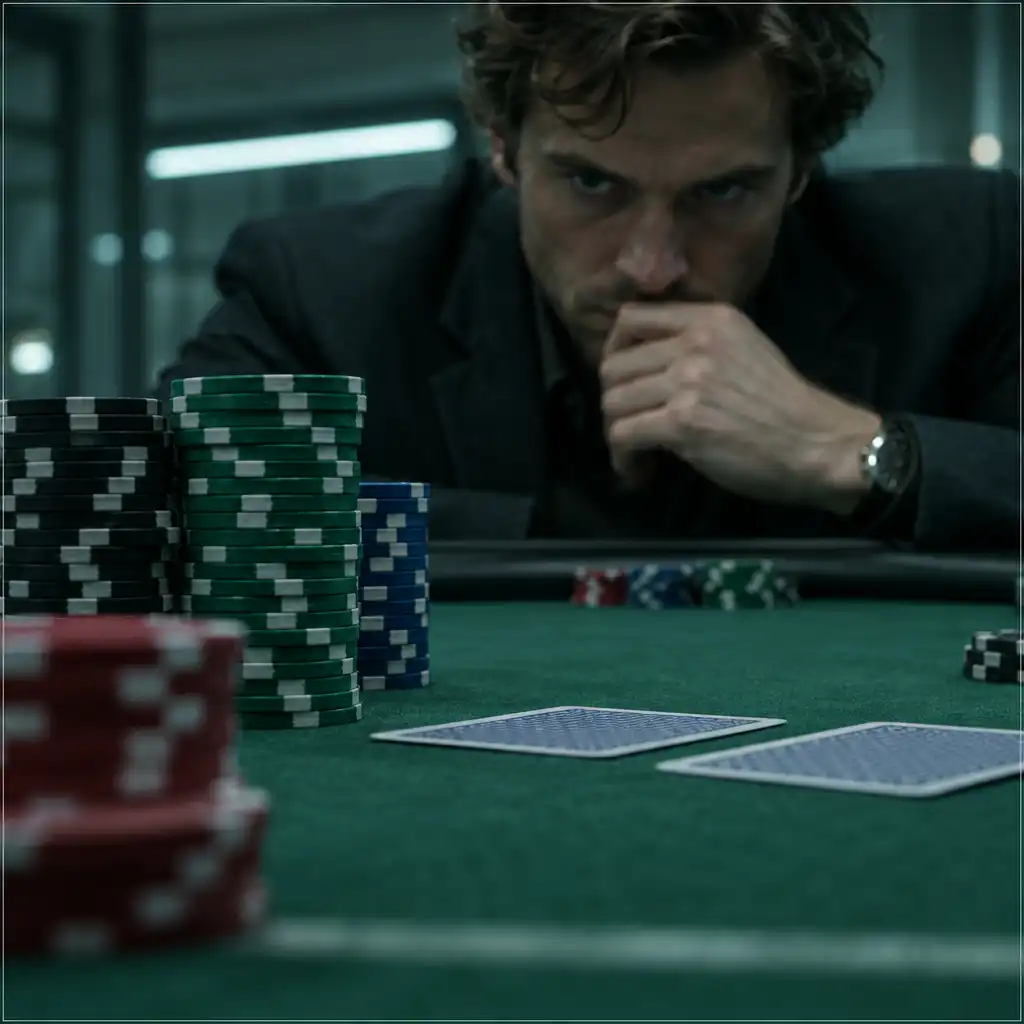
Poker face-offs centre on bluffing, reading opponents, and the quiet intensity of the card table. These films often use close-ups and reaction shots to build tension. The poker table becomes a stage for character revelation, where a twitch, a pause, or a carefully placed chip can say more than a page of dialogue.
Unlike casino-wide heists or sprawling dramas, poker films compress their conflict into a single felt-covered arena. The camera studies faces, hands, and the movement of chips, turning a card game into a psychological duel. The best examples understand that poker is not really about the cards; it is about what the players believe about each other.
- Rounders — the final heads-up match turns a friendship into a test of nerve.
- Casino Royale — the high-stakes poker game becomes a battle of ego between Bond and Le Chiffre.
- Molly's Game — the table is a controlled performance space where information is the real currency.
Dossier 04
Shadows Over the Felt
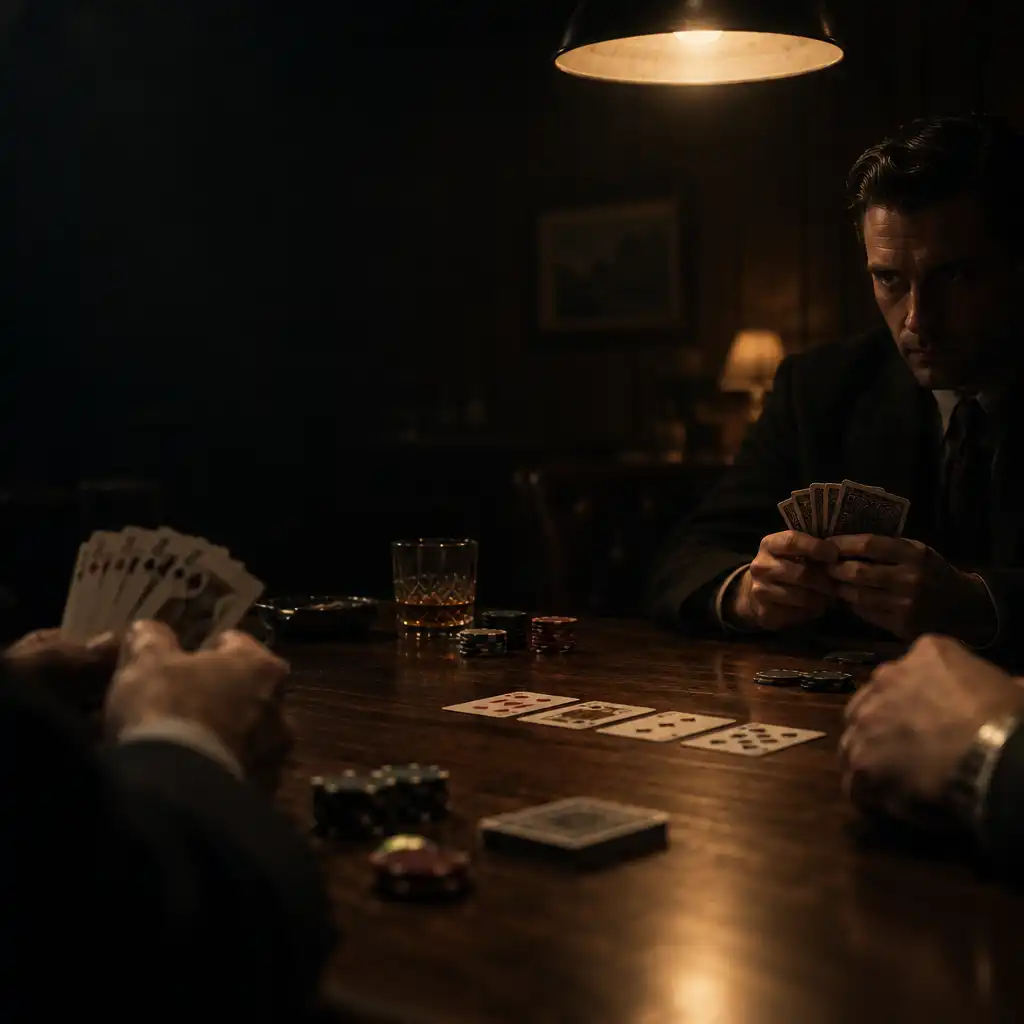
Casino noir blends gambling settings with noir's fatalism, chiaroscuro lighting, and morally compromised protagonists. The casino's artificial light and constant activity create a disorienting noir atmosphere. Common themes include betrayal, fate, and the impossibility of escape. In these films, the house always wins, but the real loss is the protagonist's soul.
The casino is an ideal noir location because it is a sealed world with its own rules, rhythms, and hierarchies. Nobody enters without a reason, and nobody leaves without a cost. The visual language of noir—deep shadows, hard edges, faces half-hidden in smoke—maps naturally onto the felt tables and mirrored ceilings of the gambling floor.
Noir Elements in Casino Cinema
- Fatalism — characters are trapped by their own choices, and the outcome feels inevitable from the first frame.
- Chiaroscuro lighting — harsh contrasts between light and shadow externalise moral ambiguity.
- Moral compromise — the protagonist is neither hero nor villain, but someone who has already crossed a line.
Examples include The Killing, Hard Eight, and Croupier, each of which uses the casino as a closed system where fate deals the final hand.
Dossier 05
The Comic Long Shot
Gambling comedies use high-stakes settings for farce, satire, and comic ensemble chaos. The casino becomes a machine for misunderstanding, where every character has a scheme and none of the schemes align. The humour comes from the gap between the seriousness of the stakes and the absurdity of the people chasing them.
These films often send up the conventions of heist and drama subgenres, puncturing the myth of the cool professional with slapstick, mistaken identity, and escalating disaster. The casino's rigid rules and formal dress codes provide a perfect straight-man backdrop for comic anarchy.
Examples include The Hangover, California Split, and Dirty Rotten Scoundrels, each of which finds comedy in the collision between ambition and incompetence.
Dossier 06
Portraits of Obsession
Character studies use gambling as a lens for intimate portraits of obsession, compulsion, and the personal cost of the game. These films are less interested in the mechanics of the bet than in the psychology of the bettor. The casino is a mirror that reflects the character's needs, fears, and self-deceptions back at them.
Unlike high-stakes dramas, which often build toward a single catastrophic wager, character studies unfold as a slow accumulation of small choices. The drama is in the pattern, not the payoff. The audience is asked to understand a character who may not understand themselves, and to sit with the discomfort of watching someone choose the game over everything else.
Examples include The Cincinnati Kid, Mississippi Grind, and Owning Mahowny, each of which keeps the camera close to a protagonist whose relationship with risk defines their life.
Classification Criteria
How We Classify
Films are assigned to subgenres based on narrative structure, character function, and visual style—not on the specific casino game depicted. A film may appear in multiple categories if it blends subgenres.
Narrative Structure
Does the plot revolve around a heist, a personal crisis, or a psychological duel? The shape of the story determines its primary category.
Character Function
Is the protagonist a planner, an addict, a detective, or a comic foil? The role the character plays in the gambling world guides classification.
Visual Style
Does the film use noir lighting, documentary realism, or stylised set pieces? Cinematography often signals the subgenre's emotional register.
Editorial Transparency
No external ratings or awards are used for classification. The criteria are editorial, transparent, and open to revision as the archive grows.
Closing CTA
Find These Films in NZ
Use the watchlist directory to see where casino and gambling films are legally available to stream or rent in New Zealand. Filmrevie Wvault does not host or stream any films.